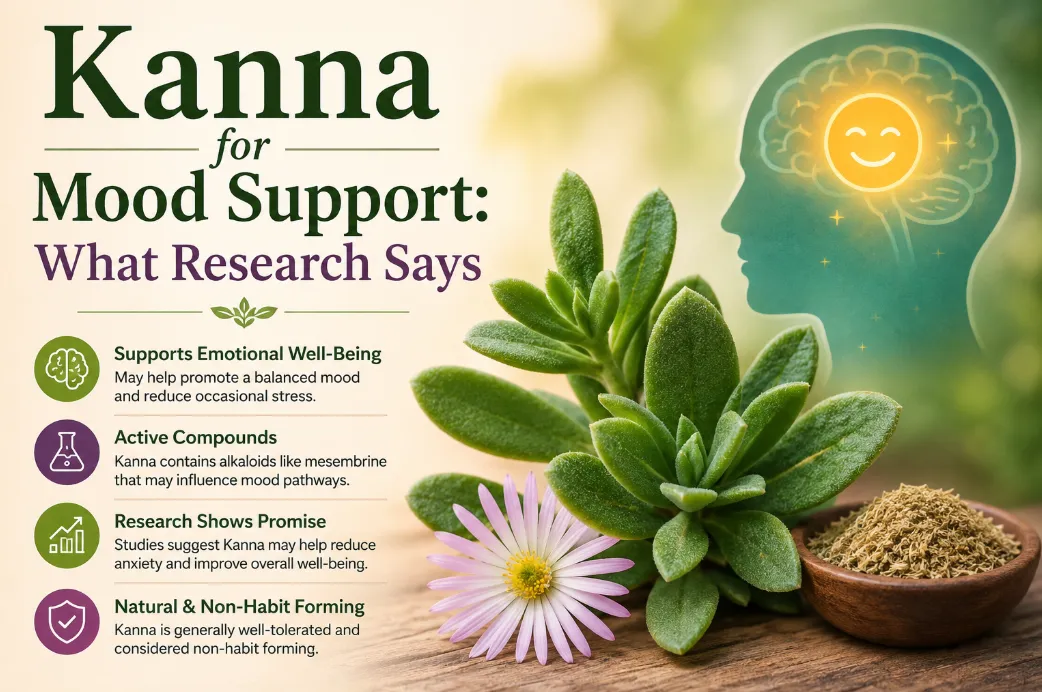
Kanna has become one of the most talked-about botanical ingredients in the wellness industry, particularly among consumers looking for natural ways to support emotional well-being. Traditionally used in South Africa for centuries, Kanna is now gaining worldwide attention due to its unique active compounds and growing body of scientific research.
As interest in plant-based wellness continues to expand, brands such as MyZen Organix are helping introduce Kanna products to consumers seeking innovative botanical solutions for mood and overall wellness.
But does Kanna actually support mood, and what does the research say?
In this guide, we’ll explore how Kanna works, examine the science behind its mood-supporting properties, and discuss why researchers continue to study this fascinating South African plant.
What Is Kanna?
Kanna (Sceletium tortuosum) is a succulent plant native to South Africa.
For hundreds of years, indigenous Khoikhoi and San communities traditionally used Kanna for purposes related to:
-
Emotional well-being
-
Social interaction
-
Stress management
-
Endurance during challenging conditions
-
Overall wellness
Historical records frequently describe Kanna as a botanical associated with mood elevation and emotional balance.
Today, Kanna is commonly available in:
-
Gummies
-
Capsules
-
Extracts
-
Powders
-
Tinctures
Its growing popularity stems largely from its unique alkaloid content and the scientific interest surrounding its potential effects on mood.
Why Is Kanna Associated With Mood Support?
The answer lies in its naturally occurring alkaloids.
Researchers have identified several important compounds in Kanna, including:
-
Mesembrine
-
Mesembrenone
-
Mesembrenol
-
Tortuosamine
Among these, mesembrine and mesembrenone have received the most scientific attention due to their effects on neurological pathways associated with emotional well-being.
These compounds are believed to influence serotonin-related activity and other signaling pathways involved in mood regulation.
How Kanna Works
Serotonin Activity
One of the most important discoveries regarding Kanna is its interaction with serotonin transport systems.
Serotonin is a neurotransmitter involved in:
-
Mood regulation
-
Emotional processing
-
Stress response
-
Overall mental well-being
Research has shown that mesembrine is a potent serotonin transporter inhibitor, while mesembrenone may influence both serotonin transport and phosphodiesterase-4 (PDE4) activity.
This mechanism is one reason Kanna has attracted interest among researchers studying mood-related wellness applications.
PDE4 Inhibition
Scientists have also investigated Kanna’s effects on PDE4, an enzyme involved in cellular signaling and neurological processes.
The combination of serotonin-related activity and PDE4 inhibition gives Kanna a unique profile compared to many other botanical ingredients.
What Research Says About Kanna and Mood
While Kanna has a long history of traditional use, modern clinical research is still relatively limited.
However, several studies have provided valuable insights.
Traditional Use Supports Mood Enhancement
One of the strongest pieces of evidence comes from centuries of traditional use.
Historical accounts consistently describe Kanna as a plant used to:
-
Promote well-being
-
Enhance mood
-
Reduce emotional distress
-
Support social interactions
These traditional uses helped inspire modern scientific investigation.
Human Studies Show Promising Results
Clinical studies involving standardized Kanna extracts have produced encouraging findings.
Research involving standardized Sceletium tortuosum extracts has demonstrated effects on brain regions involved in emotional processing and stress responses. Scientists observed changes in amygdala activity and related neural networks, which play important roles in how individuals respond to emotional stimuli.
These findings suggest that Kanna may influence neurological systems associated with mood and emotional well-being.
Stress and Emotional Resilience
Several studies have explored Kanna’s potential role in helping individuals manage everyday stress.
A review of the scientific literature notes that Sceletium tortuosum has shown potential for managing stress in healthy individuals and supporting emotional well-being, although larger clinical trials are still needed.
Kanna and Emotional Well-Being
One reason consumers are increasingly interested in Kanna is its reputation for promoting emotional balance without heavy sedation.
Unlike some wellness ingredients that are primarily associated with sleep support, Kanna is often discussed in relation to:
-
Positive mood
-
Calmness
-
Mental clarity
-
Emotional resilience
This combination has made it a popular ingredient in modern wellness formulations.
What Researchers Are Still Studying
Although the early findings are promising, researchers emphasize that more studies are needed.
Current limitations include:
Small Sample Sizes
Many existing studies involve relatively small groups of participants.
Short Study Duration
Most human trials have been conducted over days or weeks rather than months or years.
Limited Clinical Populations
Most studies have focused on healthy adults rather than individuals with diagnosed mood disorders.
As research expands, scientists hope to gain a clearer understanding of Kanna’s long-term effects and potential wellness applications.
Additional Benefits Being Investigated
Beyond mood support, researchers are exploring Kanna’s potential influence on:
Cognitive Function
Some studies suggest standardized Kanna extracts may support executive function and cognitive flexibility.
Attention and Focus
Researchers have examined Kanna’s effects on complex cognitive tasks and reactive performance.
Stress Response
Ongoing studies continue to investigate Kanna’s relationship with stress-related pathways and emotional resilience.
These additional areas of research contribute to Kanna’s growing popularity.
Is Kanna Safe?
Current research suggests that standardized Kanna extracts are generally well tolerated in healthy adults.
Reported side effects are typically mild and may include:
-
Headache
-
Digestive discomfort
-
Dizziness
As with any supplement, individuals should consult a healthcare professional before use, especially if they are taking medications or have underlying health conditions.
How to Choose a Quality Kanna Product
When shopping for Kanna supplements, consider:
Standardized Extracts
Look for products that identify alkaloid content or standardized extract formulations.
Transparent Labeling
Choose brands that clearly disclose:
-
Ingredients
-
Serving sizes
-
Extract information
Third-Party Testing
Independent testing helps verify product quality and consistency.
Reputable Manufacturers
Purchase from companies committed to quality control and transparency.
Frequently Asked Questions
Does Kanna Help Support Mood?
Traditional use and emerging research suggest that Kanna may support mood and emotional well-being through its active alkaloids.
How Does Kanna Affect Serotonin?
Research indicates that mesembrine and related alkaloids may influence serotonin transporter activity.
Is Kanna Scientifically Proven for Mood Support?
Research is promising, but larger and longer-term clinical studies are still needed.
What Are the Active Compounds in Kanna?
The primary alkaloids include mesembrine, mesembrenone, mesembrenol, and tortuosamine.
Is Kanna Safe to Use?
Studies involving healthy adults have generally reported favorable tolerability when used responsibly.
Final Thoughts
Kanna has a long history of traditional use for supporting emotional well-being, and modern research is beginning to uncover the science behind these historical practices. Its unique alkaloids, particularly mesembrine and mesembrenone, appear to interact with serotonin-related pathways and other neurological systems involved in mood regulation.
While current studies are still relatively limited, the available evidence suggests that Kanna may offer promising mood-supporting properties and contribute to overall emotional wellness. Combined with centuries of traditional use and growing scientific interest, Kanna continues to stand out as one of the most intriguing botanical ingredients in today’s wellness landscape.
As research progresses, we will likely gain an even clearer understanding of how Kanna supports mood and why it has remained an important plant in South African traditional wellness practices for generations.